In sports betting, how much a team wins by is usually all that matters. The most popular way to bet for the two most popular sports, basketball and football, is with the point spread, also known as. A point spread in sports is a way for oddsmakers to make a matchup between two unbalanced teams more balanced by giving points to or taking points away from each team. Spread betting is any of various types of wagering on the outcome of an event where the pay-off is based on the accuracy of the wager, rather than a simple 'win or lose' outcome, such as fixed-odds (or money-line) betting or parimutuel betting. A spread is a range of outcomes and the bet is whether the outcome will be above or below the spread. The spread is also known as “the line” or “morning line”. This provides the basis for wagering: points may be “given” or “taken” to equalize a bet, or bets may be made that the difference will be larger or smaller than the estimate. In simpler terms its when one team is the favorite over the other so the spread is how many.
- Spread Meaning In Betting Meaning
- 1 Spread Meaning In Sports Betting
- Spread Meaning In Betting Horse Racing
- Spread Meaning In Betting Nfl
Are you serious about making money from betting on soccer? If you answered
yes to that question, then you’re going to want to limit the number of mistakes
you make. There’s an article in our soccer betting guide that actually addresses
the common mistakes made by soccer bettors. This article is designed to help
people identify the errors they are making that will inevitably cost them money.
One of the mistakes we mention is ignoring the many alternative betting
opportunities that soccer presents.
We understand why so many people have a tendency to want to stick to the
simple wagers they are comfortable with. However, understanding the different
types of soccer wagers is one good way to improve your chances of identifying
better opportunities. By learning how to use the right type of wager in the
right situation, you’ll find it much easier to find value in the betting
markets.
In addition to using alternative wagers, you should also consider spread
betting on soccer. This is an entirely different way to gamble on soccer, and it
can be very profitable. There can be a great deal of risk involved, however,
which is why it’s vital to make sure you understand what you’re doing. That’s
why we’ve written this article. We explain what spread betting is as it relates
to soccer, provide some useful tips and advice, and discuss some recommended
strategies.
Soccer Spread Betting Explained
Spread Meaning In Betting Meaning
We want to make one thing very clear before we get started. Spread betting is
NOT the same as betting on the point spread. Also known as handicap betting, the
point spread is a very popular way to wager on sports. Looking at the United
States, in particular, people use this form of betting on American football,
basketball and ice hockey. Although their names are similar, they actually have
very little in common.
Let’s quickly explain how a point spread works, just so you’ll understand the
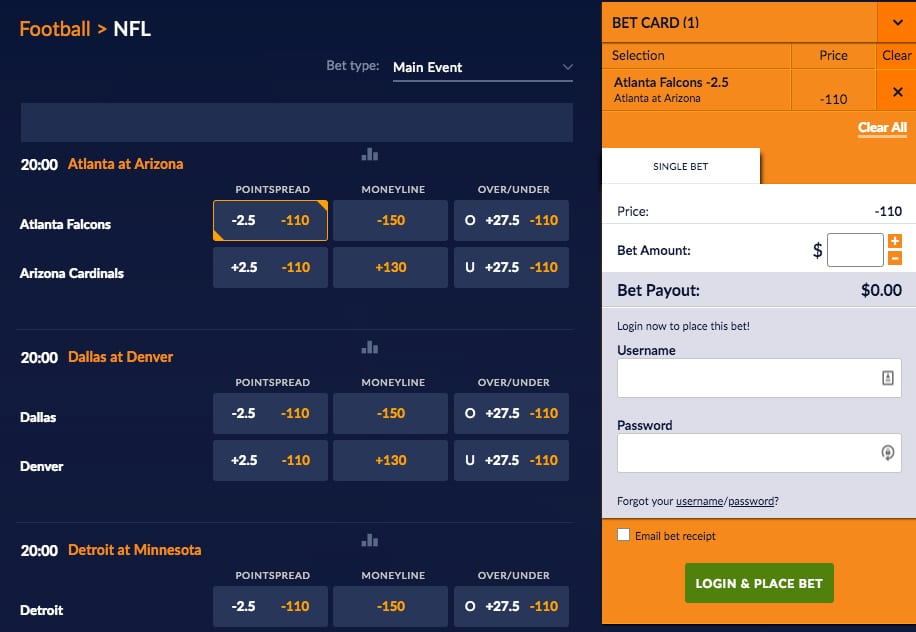
differences. With the point spread, you’re making a fixed odds wager on a game.
In this type of wager, the favorite is effectively deducted points (or goals in
the case of soccer) and the underdog is awarded points. These adjustments in the
points/goals are referred to as the spread. Here’s an example.
1.91
If you backed Hull City on this point spread, you’d win your wager as long as
one of the three outcomes occurred: they won, they drew or they lost by less
than 1 goal. This is because 1.5 goals are “added” to their score for the
purposes of the wager. If you backed Watford, you’d need them to win by at least
two goals. This is because 1.5 goals are “removed” from the score for the
purposes of the wager. When you win, you’re paid out based on the agreed odds
(1.91 in this case). When you lose, you are giving up your initial stake.
Spread betting DOESN’T involve fixed odds, and you don’t simply win or lose.
These are the key differences. With spread betting, there are no odds
involved at all. There’s no fixed stake or fixed payout either. Instead, wagers
are settled based on how accurate (or inaccurate) your predictions were. The
more right you were, the more you win. The more wrong you were, the more you
lose.
In some respects, spread betting is a little like betting the over/under. The
bookmaker sets a spread for a specific market, and you have to predict whether
the relevant total will be higher or lower than the spread. But instead of just
winning or losing your wager based on the outcome, how much you win or lose
depends on how much higher or lower the relevant total is.
We realize that this probably comes across as way more complicated than it
actually is. We’re going to use an example to make this easier to understand.
Here’s how a spread betting market might look for the total number of goals
scored in a soccer game.
2.50
As you can see, there are two options here. We can sell at 2.30, or we can
buy at 2.50. Do not confuse these numbers with odds, as they actually just
relate to the number of goals. We “sell” at 2.30 if we’re expecting there to be
LESS than 2.3 goals, and we “buy” at 2.50 if we’re expecting there to be MORE
than 2.5 goals. The difference between the two numbers is called the spread.
Sound familiar? You guessed it! That’s where this form of betting gets its name.
The amount of money we make or lose on our wagers is determined by a
combination of three things.
- The number of goals we bought or sold at
- The stake we bought or sold for
- The number of goals scored in the game
Let’s say that we’d chosen to buy at 2.50, for a $10 stake. If there were
more than 2.5 goals in the game, we’d win. Our payout would be calculated by
multiplying our stake by the difference between the number of goals scored and
the number of goals we bought at. So if there were three goals, for example,
we’d win $5. Three minus 2.5 is 0.5, which gives us $5 when we multiply that by
our $10 stake. If there were four goals, we’d win $15. Four minus 2.5 is 1.5,
which gives us $15 when we multiply that by our $10 stake.
If there were less than 2.5 goals in the game, we’d lose. Our losses would be
calculated in the same way. If there were no goals scored, for example, we’d
lose $25. 2.5 minus zero is 2.50, which is $25 when multiplied by our $10 stake.
If there was just one goal scored, we’d lose $15. 2.5 minus one is 1.5. Multiply
that by our $10 stake and we get $15.
The principle is pretty much the same when selling, but in reverse. If we
chose to sell at 2.30, we’d win if there were less than 2.3 goals scored and
we’d lose if there were more. The amount we’d win or lose would be calculated
using the same principle we just outlined.
As you can see, spread betting really isn’t that complex at all: not once you
understand the basic concept. You buy when you expect the relevant total to be
higher than quoted, and you sell when you expect it to be lower. How much money
you’ll win or lose is calculated by multiplying your initial stake by the
difference between the final total and the number you bought or sold at.
Where spread betting starts to get more complicated is with all the different
markets available. Not all of the markets are as straightforward as the total
goals market we just used in our example. Let’s take a deeper look at the
various markets that are available.
Soccer Spread Betting Markets
The bookmakers that offer sports spread betting usually have a huge range of
markets available for soccer games. We’ll start by listing some of the simpler
markets below.
- Total corners
- Total bookings
- Total team goals
- Total first half goals
- Total second half goals
- Total offsides
Each of these markets works in the same way as the total goals market. The
bookmaker sets a spread, and you have to decide whether the final total will be
higher or lower. For total corners, you’re wagering on how many corners there
will be in a game. For total bookings, you’re wagering on how many bookings
there will be in a game. And so on.
In addition to these markets, there are some other over/under type markets
that are a little more complex. These include the following.
- Total shirt numbers
- Total goal minutes
- Total team goal minutes
- Total player goal minutes
For total shirt numbers, you’re wagering on the aggregate total of the shirt
(jersey) numbers of all the players who start the match. This is what we would
consider to be a novelty market, and not one we recommend getting involved with.
Unless you have inside information about which players are going to start a
game, it basically comes down to an educated guess. This isn’t really a problem
for anyone just betting for fun, but it’s not a good way to make money in the
long run.
For total goal minutes, you’re wagering on the cumulative total number of
minutes on the clock when any goals are scored. For example, let’s say a game
featured three goals and they were scored on the 21st, 42nd and 65th minutes.
The total here would be 128 (21 + 42 + 65). Again, this is a novelty market in
our opinion. Some people believe they can make informed judgements here, but
we’re not really sure how.
Total team goal minutes and total player goal minutes work in the same was as
total goal minutes. They’re just based on the goal minutes for a specific team
or specific player.
There are lots of other markets for soccer games too. Most of these are even
more complicated, and many of them are just simply not worth experimenting with.
There are a few exceptions though. Here’s a list of the ones we recommend
learning about.
- Win index
- Goal supremacy
- Goals x corners
- First goal minutes
Win index markets are quoted per team. The exact rules vary from one
bookmaker to another, but these are usually points based markets where teams are
awarded points based on whether they win, lose or draw. For example, a bookmaker
may award 25 points for a win, 10 points for a draw, and 0 points for a loss.
Here’s how a win index market might look for the Newcastle United versus
Leeds United game we mentioned earlier.
19.50
This market is for Newcastle’s result in the game. We would buy at 19.50 if
we thought Newcastle were going to win, as that would earn them 25 points. If we
thought that they were going to lose or draw, we’d sell at 18.00
1 Spread Meaning In Sports Betting
Goal supremacy is based on the winning margin of a game. Here’s an example.
Goal Supremacy (Newcastle)
1.35
Note that this refers to Newcastle goal supremacy specifically, so this
market is for how many goals Newcastle will win by. If we thought that they’d
win by more than one goal, we’d buy at 1.35. If we thought that they’d win by
only one goal, or that they’d lose or draw the game, we’d sell at 1.15. A
negative result is possible with this market. If Leeds won by two goals, for
example, then the result would be -2.
Goals x corners is one of the more unusual soccer spread betting markets. The
relevant total here is the number of goals scored multiplied by the number of
corners. So if there were two goals scored in a game, and ten corners, the final
total would be 20. We don’t generally pay too much attention to this market, but
every once in awhile we will place a wager here.
First goal minutes is based on the time of the first goal scored in a game.
If the first goal was scored in the 15th minute, for example, then the result
would be 15. If the first goal was scored in the 67th minute, the result would
be 67. At most bookmakers, no goal at all means the result is 90. Other
bookmakers have different rules though, so check to make sure.
Any bookmaker that offers soccer spread betting will provide a complete list
of all the different markets on their website. Typically, we don’t recommend
getting involved with any of the markets not outlined on our site, but it never
hurts to see what’s available. Who knows? You might discover a new, attractive
market that we have never come across before.
Spread Betting on Soccer vs Fixed Odds Betting
Spread betting on soccer is nowhere near as popular as fixed odds betting for
several reasons. One major reason is that people aren’t even aware of it.
Another is that some people think it’s more complicated than it actually is.
That’s understandable really, as it DOES appear quite complex until you
understand the basic concept.
There are also some notable disadvantages to spread betting when compared
with fixed odds betting. The following are especially significant.
- Stakes and payouts are not fixed
- Potential for big losses
- Fewer companies to bet with
- Bonuses and rewards are less common/valuable
Most people who place wagers on soccer are what we call recreational bettors.
We referred to these people in the introduction to this article. They’re the
ones who are only really interested in having fun, so they like to keep things
as simple as possible. With fixed odds they know exactly how much they stand to
win or lose for every wager that they place. The same cannot be said with spread
betting, which can make some people a little nervous.
There’s also the potential for huge losses, and when we say huge, we mean
HUGE. With some spread betting markets, it’s possible to lose the initial stake
many times over. When the unexpected happens, which is does very often; the
losses can be very substantial. This means a sizeable bankroll is required,
which is not an option for everyone. Even when it is an option, there are plenty
of people who simply don’t like being exposed to such high levels of risk.
The third disadvantage on our list won’t have a huge impact on everyone, but
it’s worth mentioning nonetheless. There are LOTS of options when it comes to
fixed odds betting, with hundreds of bookmakers and betting sites to choose
from. With spread betting, however, the options are more limited. There are only
a few spread betting firms that are genuinely reputable and trustworthy, and
most of them only operate in specific regions. In some parts of the world, there
are no decent options at all.
Now it’s time to discuss our fourth and final disadvantage, which can have a
significant impact on those who wager for high stakes or in high volume. Most
online bookmakers and betting sites offer bonuses and rewards to their
customers. This gives you the opportunity to add extra value to your bankroll
just by depositing and wagering as normal. The more you wager, the more valuable
the bonuses and rewards are likely to be. Spread betting firms, on the other
hand, don’t tend to be quite as generous with the bonuses and rewards that they
offer. It can be frustrating to miss out on this much value.
Anyone who is seriously thinking about spread betting on soccer should
definitely take these disadvantages into account. There are also some advantages
worth considering too. Just take a look at the list below.
- Potential for big returns
- More betting options
- Value is often easier to identify
- Able to close positions early
- Winners are unlikely to have accounts limited or closed
Finally, it’s time to talk about some of the positives! The flipside to the
potential for big losses that we mentioned earlier is the fact that there’s also
the potential for big returns. As an example, let’s say we bought total goals in
a soccer game. Although it’s rare, high scoring games are always a possibility.
Six, seven or even more goals has the potential to give us a nice return on our
money, perhaps five times our initial stake or higher. If we only bet on the
over/under with a traditional bookmaker, then we’d have just won at the
appropriate odds. That would almost certainly have meant a lower payout.
Having more betting options is ALWAYS a good thing, and spread betting
definitely gives you that. There are all kinds of different markets as we
discussed earlier, and this makes it much easier to find good spots for placing
a wager.
Identifying value in fixed odds soccer betting markets can be extremely
difficult. The bookmakers are very good at setting their odds at just the right
levels, so that it’s not at all clear where the value lies. While the same
general principle applies to spread betting, there still seems to be more
opportunities to easily spot value. This is probably because the people who set
the spreads are more likely to take positions based on their own opinions, which
means you’ll often see spreads that are significantly different than the rest of
the market. If you have a strong opinion yourself, you may be able to take
advantage of these off-market spreads.
Being able to close positions early is one of the biggest advantages of all.
This is actually possible with fixed odds betting these days, thanks to the
“cash out” feature that most bookmakers offer, but it usually comes at a cost.
The amount of any cash out offer you receive for an existing wager will
typically have a big margin built in. With spread betting, closing a position
early isn’t nearly as expensive.
Essentially, all it means is settling a wager early. For example, let’s say
we bought total goals at 2.10 for a game. Just 20 minutes into the game, and two
goals have already been scored. Yikes, this makes us a little nervous. The total
goals spread will now move, as it’s adjusted during a game based on what
happens. With two goals scored after 20 minutes, it would probably be at
something like 3.60 – 3.80. We could close our position and make a profit of 1.5
times our initial stake. The 1.5 is the difference between the price we bought
at and the current price to sell.
Doing this would protect us against no more goals being scored. We’re
basically taking a safe option to ensure a profit. We can use similar tactics to
cut our losses. Let’s say we had sold total goals in this game rather than
bought them, at 1.90. The two early goals would mean that we’re already
guaranteed to lose, but we could lose A LOT if several more goals were to be
scored. We could instead close our position and take a loss of 2.9 times our
initial stake. The 2.9 is the difference between the price we sold at and the
current price to buy.
It’s not always right to close a position early of course, but it’s nice to
have the option. If our outlook changes after watching part of a game, we can
close our initial position and then enter another one if we want. The scenario
we just went over is a prime example of when taking this approach would be
beneficial. If it’s relatively early on in the game and the odds have already
moved substantially, then it makes sense to cut our losses to avoid a
devastating loss. It can also make sense to take some guaranteed profit when
it’s available, rather than risk that profit for the chance of making even more.
The final advantage on our list is very enticing for soccer bettors who win
money consistently. Bookmakers and betting sites don’t like customers who win,
for obvious reasons, so they’ll often limit the amounts that these customers can
stake. In some instances, their accounts may be closed permanently. This means
it can be difficult for winning bettors to place their wagers. They can always
move on to a new bookmaker of course, but there are only so many trustworthy
bookmakers to go to.
Those who choose spread betting will very rarely run into a situation where
their accounts will be limited or closed. The bookmakers who offer spread
betting make their profits based on the size of the spread, and providing they
get reasonably balanced action they’re almost always going to make a profit.
They therefore don’t have to worry so much about winning customers, as winners
are unlikely to affect overall profit margins too much.
The advantages of spread betting far outweigh the disadvantages in our
opinion. We’d never advise anyone to favor it over fixed odds betting though. It
shouldn’t be viewed as a replacement, but rather as an alternative to use in the
appropriate circumstances. Just please make sure you know how to wager on the
spread effectively. That’s exactly what we help you with for the remainder of
this article.
Tips & Advice for Soccer Spread Betting
We strongly believe that the spreads are a great option for any soccer bettor
who is serious about making money. We believe they’re a great option for
recreational bettors too, as wagering this way can be very exciting. There’s one
vital piece of advice that you MUST follow though, regardless of whether you bet
for fun or for profit.
Be fully aware of the risks involved, and be very cautious when starting out.
Spread betting is high risk. That’s not up for debate. These risks are worth
taking, in our opinion, because of the potential for high rewards. That doesn’t
mean you should just ignore the risks involved though. It’s very easy to lose a
lot of money very quickly when spread betting, especially when you’re new to it.
So PLEASE be careful, and be sure to keep your stakes small to start with.
In addition to this advice, we have a few other tips for you too.
- Ensure you know the rules
- Always compare with fixed odds markets
- Bet on games involving teams you’re familiar with
- Compare potential losses with potential payouts
- Be prepared to close your positions early
Take the extra time to make sure you fully understand the rules of any spread
betting wager you place. While some rules will be straightforward and easy to
follow, others won’t be. Take the win index markets that we discussed earlier
for example. Teams earn points based on different outcomes, and the number of
points they earn for each outcome can vary from one bookmaker to another. If
you’re not familiar with the exact rules, you could easily make a wrong
decision.
As we mentioned earlier, we don’t consider spread betting to be a replacement
for fixed odds betting. In an ideal situation, you will be using both forms of
betting. Which ones you use will depend on the situation at hand. Sometimes it
will be better to place a fixed odds wager, and other times it will be right to
wager on a spread.
It takes time to learn which kind of wager to place and when, but with enough
experience it should become instinctive.
This brings us to our third tip, which will apply to any form of soccer
betting. Your goal when betting is, of course, to make informed predictions
about what’s likely to happen. Your predictions won’t be very informed when
betting on games between teams you know nothing about though, so it’s much
better to focus on teams that you do know. Your predictions WILL be informed,
and therefore far more likely to accurate.
Comparing the potential losses with the potential payout is an essential step
before placing any wager on the spreads. If you are able to identify the risk
versus reward ratio of the spread, then you’ll be able to effectively determine
value in spread betting. We don’t really see a point in risking a potential big
loss for a small potential payout, whereas risking a small loss for a big
potential payout has obvious appeal. The risk verses reward ratio wouldn’t
usually be as clear-cut, but it’s still something that’s worth looking into.
We’ve already discussed closing positions early, explaining that it’s one of
the big advantages of spread betting. Please take full advantage of this.
Closing a position early is frequently the correct thing to do. By consistently
closing your positions at the right times, you’ll be able to see major
improvements to your overall results. Plus, this is a great way to manage risk
exposure.
With that, we have reached the end of our tips. Just because they’re not
overly complicated doesn’t mean they aren’t important and valuable. While these
tips aren’t set in place to guarantee you success, they will certainly improve
your chances. Following our tips, in addition to our recommended strategies,
will increase those chances even more.
Our Preferred Soccer Spread Betting Strategies
Once you’ve been spread betting on soccer for a while, you’ll almost
certainly start finding plenty of opportunities to make good wagers. As we
mentioned earlier, though, it will take some time before you instinctively know
when to bet on the spreads and when to use fixed odds. In the meantime, you
might like to consider our preferred strategies for soccer spread betting.
Below we’ve described five specific wagers that we like to make, and when
exactly we like to make them.
Buying total goals
There are lots of occasions when we like to buy total goals. In theory, it’s
the right thing to do whenever a high scoring game is likely. This does, of
course, depend on where the spread is set though. If the spread is too high,
then buying total goals won’t represent much value.
We prefer to buy total goals for games between two teams that are stronger in
attack than they are in defense. We know that in these types of situations that
both teams tend to focus on scoring goals rather than trying to prevent them.
This means a low scoring game is unlikely. The risk of buying goals is
relatively small, but the potential rewards are significant.
While we don’t necessarily have definitive rules for where the spread needs
to be, we usually won’t place a wager if it’s three goals or more.
Buying total corners
We know it’s extremely difficult to accurately predict the number of corners
in a soccer game, so we don’t place this wager too often. In certain situations,
it can offer good value. Games involving teams that like to get wide and cross
the ball, for example, are likely to feature a lot of corners. If the spread is
below 15 in the above scenario, then we’ll usually buy corners.
We also like buying corners in games where one team is notably stronger than
the other, but the weaker team has a solid defense. The weaker team is likely to
have to defend a lot of attacking plays, and chances are that they’ll prevent
several of the opposition’s goal scoring opportunities by conceding corners.
Again, if the spread is below 15, then we’re likely to place a buy wager.
Buying total bookings
Buying total bookings can be very profitable in the right situations. Games
between two teams that both have several “feisty” players are obviously worth
considering, but realize that the spreads are typically set quite high for such
games. The bookmakers know that a lot of bookings are likely, so they take that
into account when setting the spreads. This reduces the potential value.
A better approach is to look for games where lots of bookings are likely, but
not so likely that the spread will be too high. A good example is games between
two teams who are both fighting relegation and under extreme pressure. Derby
games are often worth considering too.
Selling goal supremacy
Selling goal supremacy can be very risky, so this isn’t something we do very
often. We avoid this at all cost when there’s a good chance of the favored team
winning by a significant margin. The potential for big losses is just too great.
So then when do we sell goal supremacy? We sell goal supremacy when one team
is only slightly favored to win, and we believe the underdog could possibly pull
off a draw or even a win. We need to be pretty confident in our view, and the
spread needs to be somewhere between one and two. Although there’s still an
element of risk here, in the right circumstances we do believe the potential
advantages outweigh the potential disadvantages.
Selling first goal minutes
This is a strategy we use frequently. The spreads for first goal minutes are
consistent across virtually all soccer games, and they’re usually somewhere
between 30-33 and 36-39. This is because the average time for the first goal in
a game is within those ranges. However, it’s not that difficult to spot games
where an earlier goal is likely.
We like using this strategy on games where both teams are desperate for a
win. Soccer teams like to score as quickly as possible when they really need a
victory, as establishing a lead is very important to them. If both teams employ
the same approach, there’s a very good chance that we’ll see an early goal.
The strategies we’ve just discussed here are all fairly simple to apply. You
just need to highlight the right kind of games and then make the appropriate
wager. This makes them ideal to use while you’re getting used to soccer spread
betting. They can be profitable in the long run too, providing you’re good at
identifying the best times to use them.
Ultimately, though, you should look to also develop your own strategies.
Don’t be afraid to experiment and try new things. Not everything you try will
work out immediately, and of lot of things won’t work out at all. With a little
perseverance and the willingness to adjust your strategies over time, finding a
winning formula becomes a real possibility.
Action: Having a wager on a game.
ATS ('against the [point] spread'): If a team is 5-2 ATS, it means it has a 5-2 record against the point spread, or more commonly referred to simply as the 'spread.'
Backdoor cover: When a team scores points at the end of a game to cover the spread unexpectedly.
Bad beat: Losing a bet you should have won. It's especially used when the betting result is decided late in the game to change the side that covers the spread. Also used in poker, such as when a player way ahead in the expected win percentage loses on the river (last card).
Beard: Someone who places a wager for another person (aka 'runner').
Book: Short for sportsbook or bookmaker; person or establishment that takes bets from customers.
Bookie: A person who accepts bets illegally and charges vig.
Buying points: Some bookies or sportsbooks will allow customers to alter the set line and then adjust odds. For example, a bettor might decide he wants to have his team as a 3-point underdog instead of the set line of 2.5. He has then 'bought' half a point, and the odds of his bet will be changed.
Chalk: The favorite in the game. People said to be 'chalk' bettors typically bet the favorite.
Circle game: A game for which the betting limits are lowered, usually because of injuries and/or weather.
Closing line: The final line before the game or event begins.
Consensus pick: Derived from data accumulated from a variety of sportsbooks in PickCenter. The pick, and its percentage, provides insight as to what side the public is taking in a game.
Cover: The betting result on a point-spread wager. For a favorite to cover, it has to win by more than the spread; an underdog covers by winning outright or losing by less than the spread.
Dime: Jargon for a $1,000 bet. If you bet 'three dimes,' that means a $3,000 wager.
'Dog: Short for underdog.
Dollar: Jargon for a $100 bet. Usually used with bookies; if you bet 'five dollars,' that means a $500 wager.
Edge: An advantage. Sports bettors might feel they have an edge on a book if they think its lines aren't accurate.
Spread Meaning In Betting Horse Racing
:max_bytes(150000):strip_icc()/100800579-5bfc397246e0fb0026054b37.jpg "Spread Meaning In Betting")
Even money: Odds that are considered 50-50. You put up $1 to win $1.
Exotic: Any wager other than a straight bet or parlay; can also be called a 'prop' or 'proposition wager.'
Favorite: The expected straight-up winner in a game or event. Depending on the sport, the favorite will lay either odds or points. For example, in a football game, if a team is a 2.5-point favorite, it will have to win by three points or more to be an ATS winner.
Fixed: A participant in a particular game who alters the result of that game or match to a completely or partially predetermined result. The participant did not play honestly or fairly because of an undue outside influence.
Futures bet: A long-term wager that typically relates to a team's season-long success. Common futures bets include betting a team to win a championship at the outset of a season, or betting whether the team will win or lose more games than a set line at the start of the season.
Halftime bet: A bet made after the first half ended and before the second half begins (football and basketball primarily). The oddsmaker generally starts with half of the game side/total and adjusts based on what happened in the first half.
Handicapper: A person trying to predict the winners of an event.
Handle: The amount of money taken by a book on an event or the total amount of money wagered.
Hedging: Betting the opposing side of your original bet, to either ensure some profit or minimize potential loss. This is typically done with futures bets, but can also be done on individual games with halftime bets or in-game wagering.
High roller: A high-stakes gambler.
Hook: A half-point. If a team is a 7.5-point favorite, it is said to be 'laying seven and a hook.'
In-game wagering: A service offered by books in which bettors can place multiple bets in real time, as the game is occurring.
Juice: The commission the bookie or bookmaker takes. Standard is 10 percent. Also called the 'vig/vigorish.'
Layoff: Money bet by a sportsbook with another sportsbook or bookmaker to reduce that book's liability.
Limit: The maximum bet taken by a book. If a book has a $10,000 limit, it'll take that bet but the book will then decide whether it's going to adjust the line before the bettor can bet again.
Lock: A guaranteed win in the eyes of the person who made the wager.
Middle: When a line moves, a bettor can try to 'middle' a wager and win both sides with minimal risk. Suppose a bettor bets one team as a 2.5-point favorite, then the line moves to 3.5 points. She can then bet the opposite team at 3.5 and hope the favorite wins by three points. She would then win both sides of the bet.
Money line (noun), money-line (modifier): A bet in which your team only needs to win. The point spread is replaced by odds.
Mush: A bettor or gambler who is considered to be bad luck.
Spread Meaning In Betting Nfl
Nickel: Jargon for a $500 bet. Usually used with bookies; if you bet 'a nickel,' that means a $500 wager.
Oddsmaker (also linemaker): The person who sets the odds. Some people use it synonymous with 'bookmaker' and often the same person will perform the role at a given book, but it can be separate if the oddsmaker is just setting the lines for the people who will eventually book the bets.
Off the board: When a book or bookie has taken a bet down and is no longer accepting action or wagers on the game. This can happen if there is a late injury or some uncertainty regarding who will be participating.
Over/under: A term that can be used to describe the total combined points in a game (the Ravens-Steelers over/under is 40 points) or the number of games a team will win in a season (the Broncos' over/under win total is 11.5). Also used in prop bets.
Parlay: A wager in which multiple teams are bet, either against the spread or on the money line. For the wager to win (or pay out), all of them must cover/win. The more teams you bet, the greater the odds.
Pick 'em: A game with no favorite or underdog. The point spread is zero, and the winner of the game is also the spread winner.
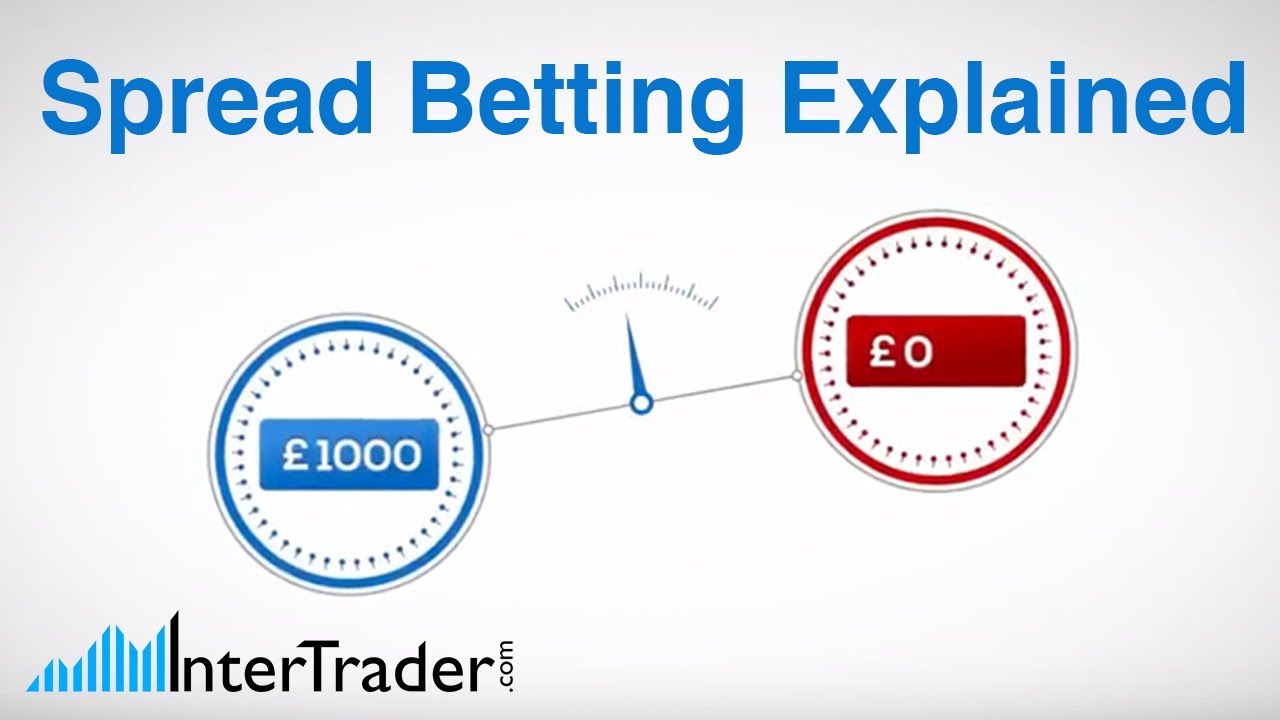
Point spread (or just 'spread'): The number of points by which the supposed better team is favored over the underdog.
Proposition (or prop) bet: A special or exotic wager that's not normally on the betting board, such as which team will score first or how many yards a player will gain. Sometimes called a 'game within a game.' These are especially popular on major events, with the Super Bowl being the ultimate prop betting event.
Push: When a result lands on the betting number and all wagers are refunded. For example, a 3-point favorite wins by exactly three points. Return on investment (ROI): In PickCenter, ROI is the amount (according to numberFire) that a bettor should expect to get back on a spread pick.
Runner: Someone who makes bets for another person (aka 'beard').
Sharp: A professional, sophisticated sports bettor.
Spread: Short for point spread.
Square: A casual gambler. Someone who typically isn't using sophisticated reasoning to make a wager.
Steam: When a line is moving unusually fast. It can be a result of a group or syndicate of bettors all getting their bets in at the same time. It can also occur when a respected handicapper gives a bet his followers all jump on, or based on people reacting to news such as an injury or weather conditions.
Straight up: The expected outright winner of the money line in an event or game, not contingent on the point spread.
Teaser: Betting multiple teams and adjusting the point spread in all the games in the bettor's favor. All games have to be picked correctly to win the wager.
Total: The perceived expected point, run or goal total in a game. For example, in a football game, if the total is 41 points, bettors can bet 'over' or 'under' on that perceived total.
Tout (service): a person (or group of people) who either sells or gives away picks on games or events.
Underdog: The team that is expected to lose straight up. You can either bet that the team will lose by less than the predicted amount (ATS), or get better than even-money odds that it will win the game outright. For example, if a team is a 2-1 underdog, you can bet $100 that the team will win. If it wins, you win $200 plus receive your original $100 wager back.
Vig/vigorish: The commission the bookie or bookmaker takes; also called the 'juice.' Standard is 10 percent.
Wager: A bet.
Welch: To not pay off a losing bet.
Wiseguy: A professional bettor. Another term for a 'sharp.'